Diabetic neuropathy
Diabetic neuropathy is nerve damage that develops when blood sugar has been high for a long time. It is the most common complication of diabetes — at least half of people with diabetes experience neuropathy at some point in their lives. Symptoms range from tingling and pain in the feet to digestive problems.
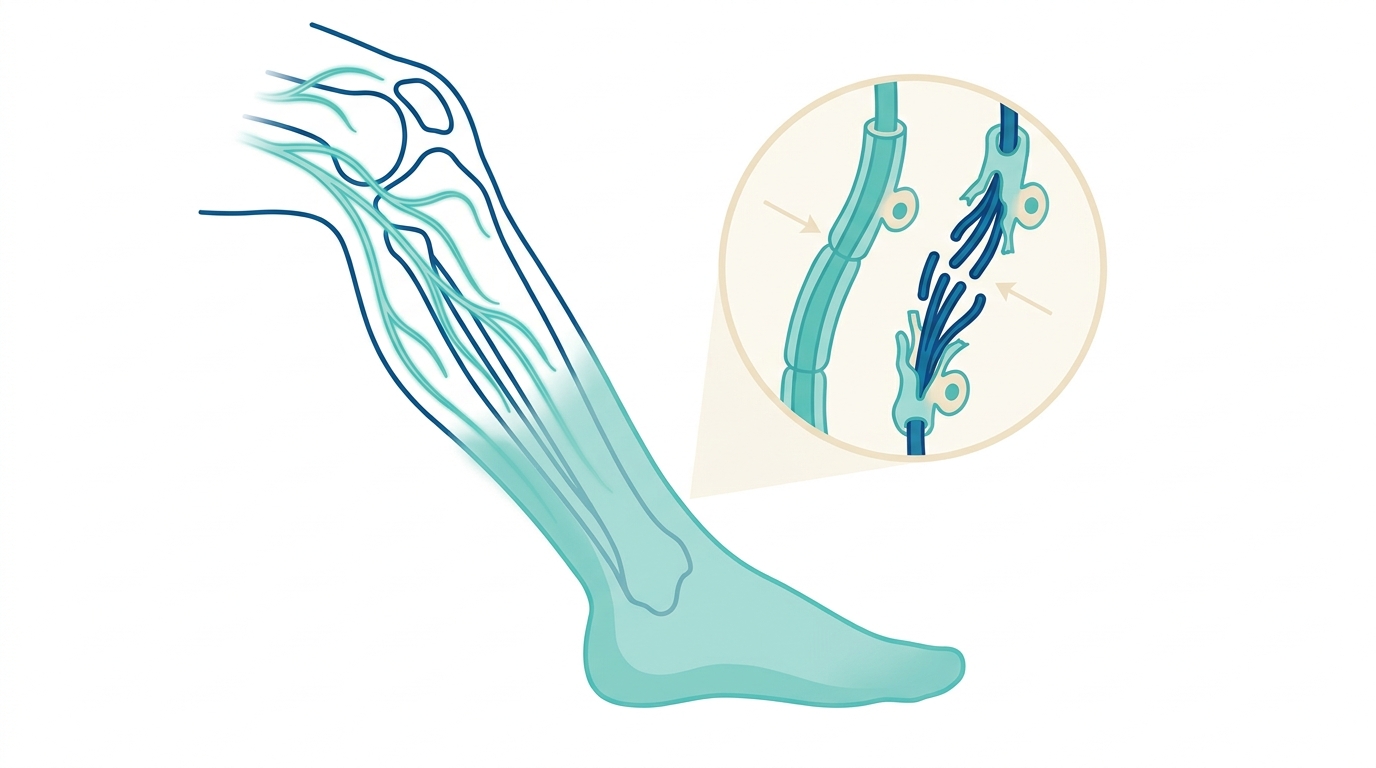
What is diabetic neuropathy?
Nerves transmit signals between the brain and the rest of the body — they trigger muscle contraction and relaxation, carry sensation from the skin and regulate the internal organs. In diabetes, high blood glucose damages the nerves in two ways: 1) it directly disrupts the metabolism of nerve cells and 2) it damages the tiny blood vessels that supply the nerves. The result is damage to the nerve's "insulation" (myelin) and impaired signal transmission.
Neuropathy can manifest in several different ways depending on which nerves are affected:
- Peripheral neuropathy — the most common. The nerves of the hands and feet are affected.
- Autonomic neuropathy — the nerves controlling internal organs (heart, stomach, intestines, bladder, sex organs) are affected.
- Focal neuropathy — a single specific nerve is suddenly damaged (e.g. facial nerve, wrist nerve).
- Proximal neuropathy (diabetic amyotrophy) — less common, affects hip and thigh muscles.
Peripheral neuropathy: the most common form
Usually starts in the toes and soles, gradually moves up the lower legs and later affects the hands. Symptoms are:
- Tingling, prickling or burning
- Numbness or reduced sensation
- Severe pain, especially at night (can disturb sleep)
- Hypersensitivity to touch (a bedsheet may feel painful)
- Weakness in the legs, coordination problems
- Muscle atrophy
Autonomic neuropathy
The autonomic nervous system controls everything we don't consciously think about: heart rate, blood pressure, digestion, urination, sweating. Symptoms of autonomic neuropathy depend on which nerves are affected:
- Heart and vessels: lack of heart rate rise during exertion, sudden drop in blood pressure when standing up (orthostatic hypotension), "silent" heart attack without chest pain
- Digestive tract: gastroparesis (slow gastric emptying — feeling of fullness, nausea after small meals), constipation or diarrhoea.
- Bladder: inability to feel a full bladder, impaired emptying, frequent urinary tract infections.
- Sex organs: erectile dysfunction in men, vaginal dryness and decreased libido in women.
- Sweating: excessive sweating during meals (gustatory sweating) or, conversely, reduced sweating in the lower limbs
- Loss of hypoglycaemia awareness — the warning symptoms (trembling, sweating) of low blood sugar disappear
Diagnosis
The diagnosis of neuropathy is based on a combination of symptoms, clinical examination and additional tests:
- Monofilament test — we touch the soles of the feet at different points with a 10 g monofilament. If the patient cannot feel it, sensation is significantly reduced.
- Vibration sensation assessment.
- Reflexes — the Achilles reflex is often the first to be reduced.
- ABI index — to check whether the sensory disturbance is related to poor blood supply.
- Electroneuromyography (ENMG) — a more accurate measurement of nerve function, performed by a neurologist.
- For autonomic neuropathy: orthostatic test, heart rate variability, gastric emptying assessment when needed.
Treatment
Neuropathy is difficult to reverse, but symptoms can be relieved and disease progression halted. Treatment consists of three levels:
1. Treating the underlying disease
The better blood sugar is controlled, the more slowly neuropathy develops. Treating all related risk factors (blood pressure, cholesterol, smoking, alcohol) is also important.
2. Symptom relief
- Neuropathic pain: pregabalin, gabapentin, duloxetine, amitriptyline. Ordinary painkillers (ibuprofen, paracetamol) usually do not help.
- Topical creams: capsaicin, lidocaine patches
- Autonomic neuropathy: blood pressure drugs, treatment of gastroparesis (metoclopramide, dietary changes — small frequent meals), treatment of erectile dysfunction (PDE5 inhibitors)
- Continuous glucose monitoring (CGM) can help restore awareness of hypoglycaemia.
3. Foot care
This is the most important part of neuropathy management for preventing amputation:
- Check your feet EVERY day — look for new wounds, blisters, redness, calluses or nail changes.
- Wash your feet daily with lukewarm water, dry carefully, especially between the toes.
- Don't walk barefoot, not even at home.
- Wear soft, breathable socks and comfortable shoes. Cut nails straight across, not rounded.
- Visit the foot nurse regularly for medical pedicure — at our clinic €40 (paid) or free with a referral from your health insurance.
- Contact the foot nurse IMMEDIATELY for any ulcer.
At our clinic
At Tallinn Endocrinology Clinic we offer for the prevention and monitoring of diabetic neuropathy:
- Endocrinologist consultation for treatment optimisation — Estonian Health Insurance and a referral 20€/5€
- Diabetes nurse counselling — how to care for your feet and improve blood sugar. Estonian Health Insurance and a referral — free of charge
- Foot nurse appointment for medical pedicure and treatment of foot ulcers (Liina Sildnik in Tallinn, Kersti Saar in Pärnu).
- ABI index measurement — €35 (both legs).
Need personal advice?
The endocrinologist and nurses at Tallinn Endocrinology Clinic will help you manage diabetes — book online, by phone or by e-mail.