Diabetic nephropathy
Diabetic nephropathy is kidney damage caused by diabetes — the most common cause of chronic kidney disease in developed countries and the leading reason people end up needing renal replacement therapy (dialysis or kidney transplant). With timely detection and treatment, however, its progression can be successfully slowed.
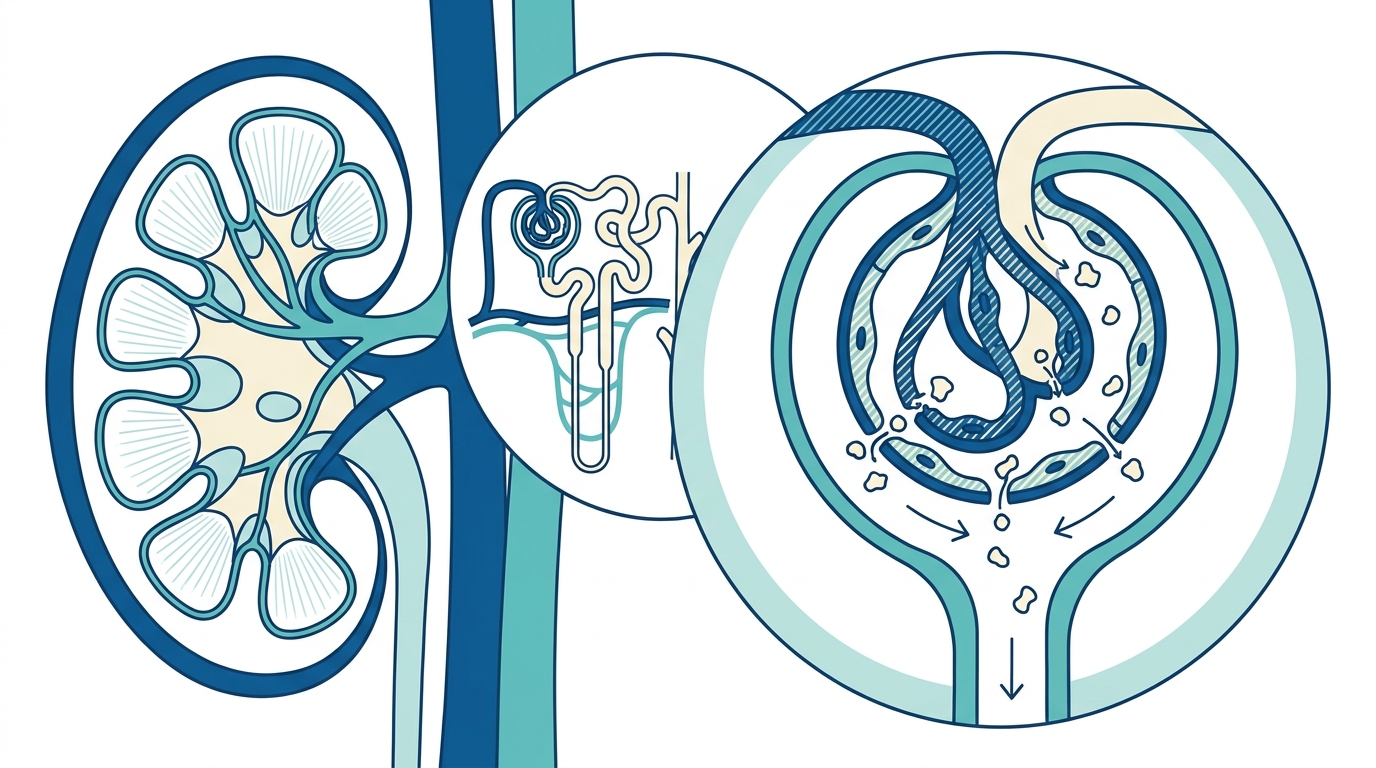
What is diabetic nephropathy?
The kidneys are the body's natural filter — every day they clean 180 litres of blood, removing waste products and excess fluid. Filtration is performed by millions of tiny units called nephrons. Each nephron contains a glomerulus — a tiny ball of blood vessels where filtration actually takes place.
Long-term high blood glucose damages the walls of the glomerular vessels — they thicken and start to leak. The first sign is the appearance of albumin in the urine, where it should normally not be. Over time the kidneys' filtration capacity decreases and eventually the patient needs dialysis or a kidney transplant.
Stages of nephropathy
- Hyperfiltration — at an early stage the kidneys filter even more than normal. No symptoms.
- Microalbuminuria (early nephropathy) — a small amount of albumin is excreted in the urine (30–300 mg/24 h or albumin/creatinine ratio 3–30 mg/mmol). Still no symptoms.
- Macroalbuminuria (overt nephropathy) — a larger amount of albumin is excreted (> 300 mg/24 h). Blood pressure starts to rise.
- Chronic kidney failure — eGFR (estimated glomerular filtration rate) drops below 60 mL/min. Waste products start to accumulate, anaemia and bone disease develop.
- End stage (eGFR < 15) — dialysis or a kidney transplant is required.
Symptoms
Like retinopathy, the early stages of nephropathy are symptom-free. By the time symptoms appear, the disease is already advanced. Symptoms are:
- Foamy urine (a sign of proteinuria)
- Swelling (around the eyes, in the feet, lower legs)
- Rising blood pressure or uncontrolled blood pressure
- Fatigue, weakness (anaemia)
- Loss of appetite, nausea
- Itchy skin
- Muscle cramps
- Sleep disturbances
- Concentration problems
Diagnosis and monitoring
Because the early stages are symptom-free, regular monitoring is the only way to detect the disease in time. Every patient with diabetes should have annual tests:
- Albumin/creatinine ratio (UACR) from a single urine sample — the most sensitive test for detecting early nephropathy
- Serum creatinine and eGFR — overall assessment of kidney function
- Home blood pressure measurement
If UACR is > 3 mg/mmol, the test is repeated in 2–3 months. Two positive results confirm the diagnosis of microalbuminuria.
Treatment
Nephropathy treatment is multifaceted:
1. Blood glucose control
HbA1c target is usually < 7%. Overly strict control in elderly patients can increase the risk of hypoglycaemia.
2. Blood pressure control
The blood pressure target is < 130/80 mmHg (even lower in some patients). First-line drugs are ACE inhibitors (e.g. ramipril) or ARBs (e.g. losartan) — they reduce pressure in the glomeruli and slow the progression of nephropathy regardless of blood pressure level. These are "mandatory" drugs in all patients with microalbuminuria.
3. SGLT2 inhibitors
Empagliflozin and dapagliflozin represent the greatest progress of the past decade. These drugs remove glucose via the kidneys but also have a strong kidney-protective effect — they significantly reduce the progression of nephropathy and the risk of cardiovascular events. We recommend them to all patients with type 2 diabetes and nephropathy in the absence of contraindications.
4. Mineralocorticoid receptor antagonists (MRA)
Finerenone is a new drug indicated for type 2 diabetic patients with nephropathy. It reduces proteinuria and protects the kidneys.
5. Diet and lifestyle changes
- Reduce salt — less than 5 g per day
- Protein in moderation (0.8 g/kg of body weight)
- Stop smoking
- Keep body weight under control
- Exercise regularly
- Avoid nephrotoxic medications (NSAIDs such as ibuprofen, long-term)
Later treatment
When nephropathy progresses to chronic kidney failure (eGFR < 60), the patient is referred to a nephrologist. In the end stage (eGFR < 15), the following is required:
- Haemodialysis (artificial kidney) — 3 times a week, 4-hour sessions
- Peritoneal dialysis — dialysis performed in the abdominal cavity, allowing home treatment
- Kidney transplant — the best long-term solution but requires finding a matching donor
At our clinic
At Tallinn Endocrinology Clinic we regularly monitor kidney function in all diabetes patients. Albumin/creatinine ratio and serum creatinine are part of our standard diabetes panel. If we find microalbuminuria, we adjust treatment (adding an ACE inhibitor or SGLT2 inhibitor) and invite you to more frequent follow-up visits. When needed, we refer you to a nephrologist.
Need personal advice?
The endocrinologist and nurses at Tallinn Endocrinology Clinic will help you manage diabetes — book online, by phone or by e-mail.