Diet, exercise and weight loss
Lifestyle changes are the foundation of diabetes treatment. Proper nutrition, regular exercise and an appropriate body weight significantly reduce blood sugar, blood pressure and cholesterol — often more than any pill. This article gives practical recommendations for people with diabetes or prediabetes.
Why is lifestyle more important than pills?
Many studies have shown that lifestyle change is the most powerful tool for preventing diabetes. In the Diabetes Prevention Program (DPP) study, 7% weight loss and 150 minutes of activity per week reduced the risk of developing type 2 diabetes by 58%, compared with 31% in the metformin group. The DiRECT trial (UK) showed that significant weight loss (15+ kg) leads to type 2 diabetes remission in nearly half of patients — without medication.
That is why lifestyle change is the foundation of every treatment — it works simply, cheaply and effectively. Pills and insulin are sometimes necessary, but they do not replace lifestyle change.
I. Nutrition
Nutrition for a person with diabetes is not a "special diet" — it is simply healthy eating recommended for everyone. The main principles are:
1. Watching carbohydrates
Carbohydrates raise blood sugar the most. You don't need to avoid them entirely — the body needs them for energy. But it is important to:
- Prefer whole-grain products and watch the recommended portion size (rye bread, oats, brown rice, buckwheat) over white bread, pastries and white rice. Use common sense: if blood sugar was already high before the meal, you don't need extra bread to push it even higher!
- Avoid refined sugar and syrups — sugary drinks (Coca-Cola, juice), sweets, pastries.
- Eat fruit in moderation — prefer whole fruit (not juice or smoothies). 1–2 portions a day. Berries are preferred (lower glycaemic index).
- Vegetables are practically unlimited — cabbage, cucumbers, tomatoes, leafy salads, broccoli, cauliflower, peppers. Eat potatoes and sweet potatoes in moderation.
- Pulses (beans, lentils, chickpeas) are excellent — high fibre, protein, low glycaemic index.
2. The plate rule
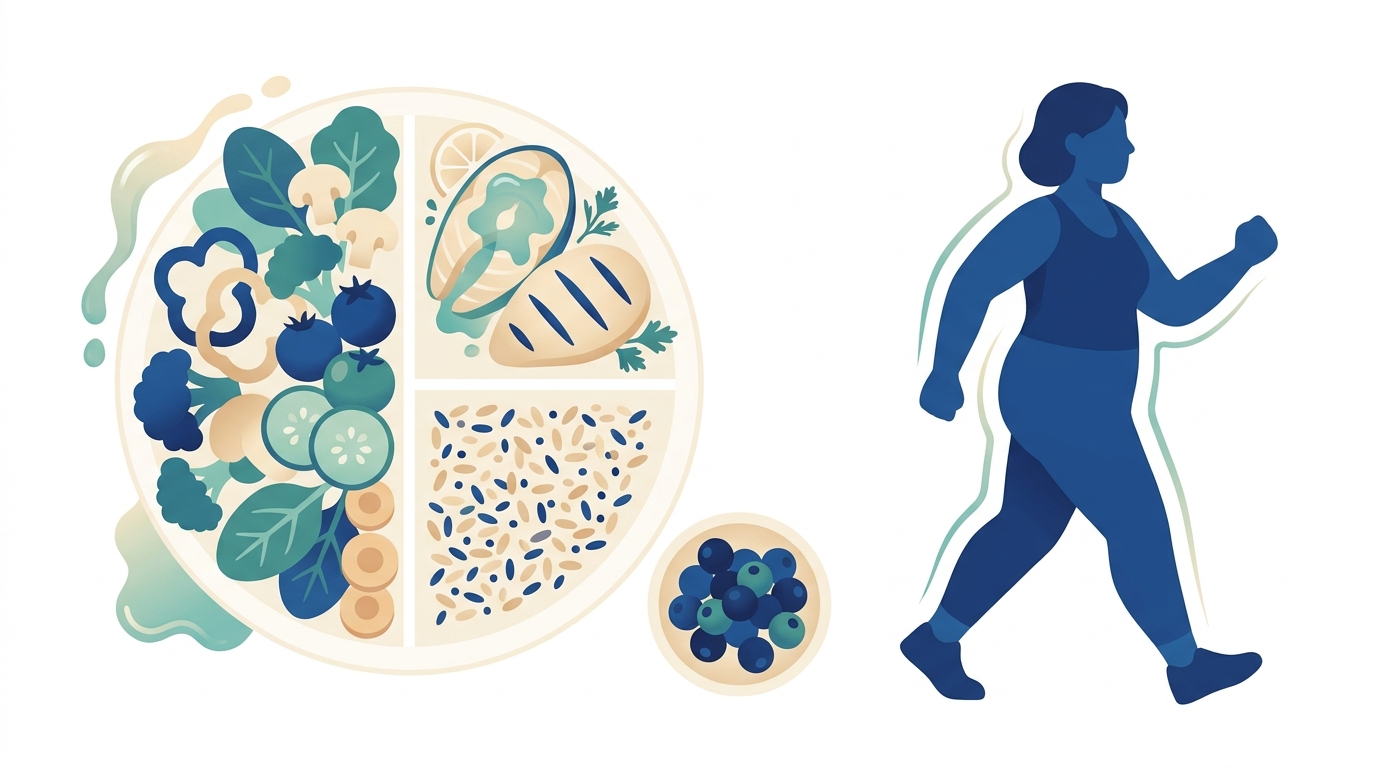
A simple rule: imagine your plate divided into three parts:
- 1/2 of the plate: vegetables and leafy salads (tomato, cucumber, broccoli, cauliflower, peppers, cabbage)
- 1/4 of the plate: protein (fish, chicken, lean meat, egg, cheese, tofu, pulses)
- 1/4 of the plate: whole grains (rye bread, quinoa, buckwheat) or potato (cooled)
- Side: 1 portion of dairy (yoghurt, kefir, cheese)
- For dessert — fresh berries or a small amount of nuts
3. Meals and timing
- Eat 3 main meals a day (breakfast, lunch, dinner) — longer intervals between meals help improve insulin sensitivity.
- Avoid snacking, especially sweet snacks. If you need a snack, prefer nuts, cheese or vegetables.
- Eat slowly — the brain needs 20 minutes to feel full.
- Have your last meal no later than 3 hours before bedtime.
4. Drinks
- Water is the best choice — drink 1.5–2 litres a day
- Tea and coffee without sugar are allowed (coffee in moderation)
- Juices and fizzy drinks — AVOID, they contain a lot of sugar
- Alcohol — in moderation (max. 1 drink/day for women, 2 for men). Note: alcohol can cause hypoglycaemia, especially in patients on insulin.
5. The Mediterranean diet
The strongest scientific evidence supports the Mediterranean style of eating for diabetes prevention and treatment:
- Plenty of vegetables and fruit
- Whole grains
- Olive oil as the main source of fat
- Fish (especially fatty fish — salmon, mackerel, sardines) 2–3 times a week
- Nuts (4–5 times a week, a handful)
- Pulses (4–5 times a week)
- Dairy and chicken in moderation
- Little red meat (once a week or less)
- Wine with meals in moderation (if at all)
II. Movement
Movement is as important in diabetes treatment as nutrition. Its effects are:
- Muscles use blood glucose without insulin — blood sugar drops within hours after exercise
- Long term, it increases insulin sensitivity (one workout improves it for 24–72 hours)
- Lowers blood pressure and cholesterol
- Helps lose and maintain body weight
- Reduces depression and improves sleep
- Reduces heart attack risk
Aerobic exercise
The recommendation is 150 minutes of moderate aerobic activity per week, spread over at least 3 days. Moderate means: heart rate rises, you breathe deeper but can still talk. For example:
- Brisk walking (5–6 km/h) — 30 min × 5 days a week
- Cycling
- Swimming
- Dancing
- Skiing, skating
Strength training
In addition to aerobic exercise, 2–3 strength sessions per week are recommended to maintain muscle mass. Muscle tissue is metabolically active — it uses glucose even at rest. For example:
- Resistance band exercises at home
- Dumbbell and kettlebell exercises at home or in the gym
- Machine-based strength exercises at the gym
- Functional exercises — squats, push-ups, pull-ups, plank
Blood sugar and exercise
Patients on insulin should measure blood sugar before and after exercise. If pre-workout glucose is below 5 mmol/L, eat a small snack (15 g of carbs) first. A long workout (over 1 h) can lower blood sugar for up to 24 hours afterwards — especially at night. Adjust your insulin dose accordingly — the diabetes nurse will help plan this.
Everyday activity
In addition to formal workouts, everyday activity is also important. The goal is 7,000–10,000 steps per day. Simple ways:
- Take the stairs, not the lift
- Park further away
- Have "walking meetings" — talk on the phone while walking
- Garden, clean, walk the dog
- Stand while working — don't sit for more than 30 minutes at a time
III. Weight loss
Excess weight and obesity are the main cause of type 2 diabetes. A 5–10% weight loss can significantly reduce blood sugar, blood pressure and cholesterol. A 15+ kg loss can lead to diabetes remission.
The main principle: calorie deficit
Only one thing causes weight loss — burning more calories than you eat. 0.5–1 kg of weight loss per week is sustainable and healthy. This requires a deficit of about 500 kcal per day (eat less or move more).
Practical recommendations
- Keep a food diary — at least for the first month. People often underestimate how much they eat.
- Reduce portion size by 20–25% — use a smaller plate.
- Eat more protein (1–1.5 g/kg of body weight) — protein satiates better than carbs and preserves muscle mass during weight loss.
- Drink water — thirst is often mistaken for hunger.
- Sleep enough (7–8 h per night) — too little sleep increases hunger hormones.
- Manage stress — cortisol increases abdominal fat.
What if lifestyle alone doesn't work?
Unfortunately, for most overweight people, lifestyle change is effective but hard to maintain. Weight-loss medication can help, but at Tallinn Endocrinology Clinic we have a clear rule: we do not treat excess weight unless the patient has first lost at least 12 kg on their own, changed their eating habits and is exercising at least three times a week. We do not write prescriptions for Ozempic, Rybelsus or Mounjaro. This is not a punishment — it is our way of guaranteeing high-quality care. Medication without lifestyle change produces short-term results; combined with the right lifestyle, the results are lasting.
At our clinic
Our diabetes nurses Riina Vello (Tallinn), Liina Sildnik (Tallinn) and Kersti Saar (Pärnu) offer personal diabetes counselling on nutrition, carbohydrate counting and weight loss. At Tallinn Endocrinology Clinic you can have:
- Body composition analysis — €20
- Stand-alone diabetes nurse appointment — €40
- With a referral from your health insurance, these services are free of charge
Together we will create a practical, personal and sustainable plan for you. Success in managing diabetes is not a magic pill — it is a habit that we improve a little every day.
Need personal advice?
The endocrinologist and nurses at Tallinn Endocrinology Clinic will help you manage diabetes — book online, by phone or by e-mail.