Walking after meals and 10,000 steps a day
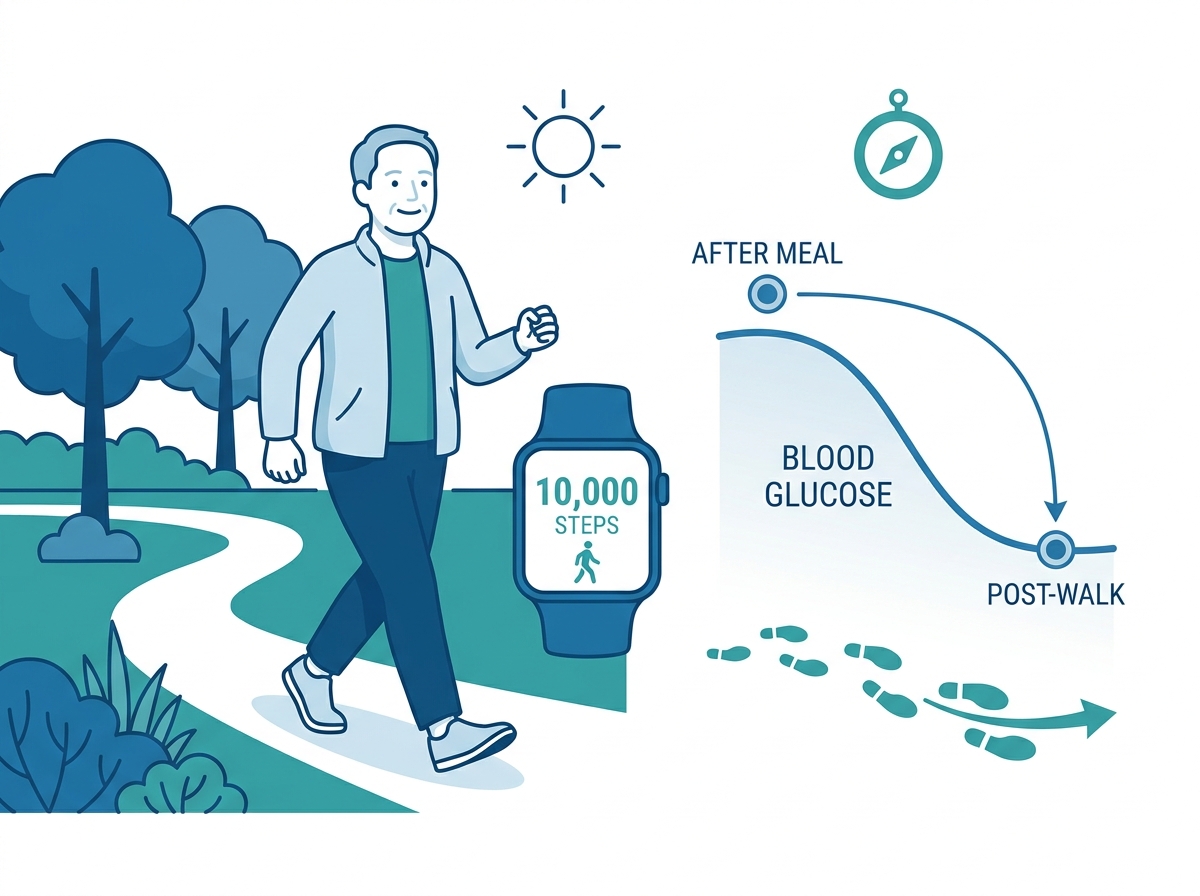
A simple, scientifically proven way to lower blood sugar and body weight is to walk for 10–20 minutes immediately after every meal and reach 10,000 or more steps a day. This article explains why it works, how to start and what the specific numbers mean for your health.
Why walking?
Walking is the most natural form of movement for the human species. Unlike the gym, cycling or running, walking requires no special equipment, prior preparation or good physical fitness. Anyone can walk — the elderly, pregnant women, people in rehabilitation and those who have never done sports. That is why walking is one of the few things that actually works at population level.
From the perspective of diabetes, excess weight and cardiovascular disease, walking is especially valuable for two reasons:
- Walking immediately after a meal — slows the sharp rise in blood sugar and improves insulin sensitivity
- Higher daily activity (total steps) — reduces long-term abdominal obesity, lowers blood pressure and cholesterol
1. Walking after meals
After eating, blood glucose rises because carbohydrates are broken down into glucose during digestion. The pancreas releases insulin to move that glucose into the cells. In people with diabetes or insulin resistance this is disrupted — blood sugar stays high for a long time.
Here a little miracle comes into play: walking. During muscle work, muscle tissue starts taking up glucose even without insulin — through a separate mechanism called "insulin-independent glucose uptake". This reduces blood sugar right after a meal by 30–50%.
The numbers from scientific studies
A 2016 study from the University of Otago found that a 10-minute walk right after a meal lowered blood sugar in patients with type 2 diabetes by an average of 12% more than a 30-minute walk at any other time of day. A 2022 meta-analysis (Sports Medicine) reached a similar conclusion — even 2–5 minutes of light movement every 20–30 minutes significantly improved glucose levels.
Practical recommendation
- Walk for 10–20 minutes immediately after every meal (breakfast, lunch, dinner)
- Pace is up to you — even a calm walk works
- Timing is the most important — the first 15 minutes after eating give the biggest effect, because that is when blood sugar starts to rise
- Combine it with your daily routine: while you eat lunch, already think about where you will walk afterwards
Typical results after 4–8 weeks
- HbA1c drops by 0.3–0.5% (especially in mild to moderate diabetes)
- Post-meal blood sugar (1–2 h after eating) drops by 1.5–2.5 mmol/L
- Insulin requirements decrease by 5–15% — many insulin users can reduce their dose
- Triglycerides decrease by 10–20% on average
- Sleep quality improves (fewer night-time hypoglycaemia events)
2. 10,000 steps a day — the long-term goal
"10,000 steps a day" is a well-known public health message originating in 1965 in Japan (the pedometer "manpo-kei" meaning "10,000 step meter"). Today, scientific research tells us more precisely what step count means for the body.
What does the science say?
- 4,000 steps a day — the lowest threshold for a daily effect; mortality already starts to drop from this level
- 7,000 steps a day — a significant reduction in mortality risk (~50% vs. 4,000 steps)
- 10,000 steps a day — significantly reduced risk of diabetes, heart attack and stroke; much better weight control
- 12,000–15,000 steps a day — additional benefit, but the marginal gain is smaller
The biggest gain is for an inactive person becoming active — moving from 2,000 to 5,000 steps a day has a greater health effect than moving from 8,000 to 12,000. So don't worry if you can't hit 10,000 on day one — every extra step is useful.
How to reach 10,000 steps
- Morning walk 30 min = about 3,500 steps
- Three post-meal walks of 10–15 min = about 3,000 steps
- An ordinary day at the office/at home = about 3,000–4,000 steps
- Total ≈ 9,500–10,500 steps a day
Easy tricks to add steps:
- Take the stairs, not the lift
- Park further away or get off the bus one stop earlier
- Have "walking meetings" — take phone calls while walking, not sitting
- Walk the dog for 30+ minutes, not 10
- Evening walks with family — a social bonus
- Use a standing desk or treadmill at work
- Set a step goal on your phone or watch and track it daily
Long-term results over 6–12 months
- Weight loss of 3–8 kg (without other dietary changes)
- Waist circumference reduced by 4–7 cm
- Systolic blood pressure drops by 5–10 mmHg
- LDL cholesterol drops by 10–15%
- HDL ("good") cholesterol rises by 5–10%
- Stress, anxiety and depressive symptoms decrease
- Sleep quality improves
- Joint pain (especially knees and back) decreases
Measurement and tracking
The easiest way to measure steps today is your phone or smartwatch:
- iPhone: the Apple Health app counts steps automatically
- Android: Google Fit or the manufacturer's app (Samsung Health, Xiaomi Mi Fit)
- Smartwatch (Garmin, Fitbit, Apple Watch, Polar) — more accurate and more motivating
- A simple pedometer (€10–30) — the cheapest option
Track not only the total but also "daily consistency". 8,000 steps every day is better than 0 steps on weekdays + 70,000 on the weekend.
Recommendations for diabetes patients
Blood sugar and walking
On insulin therapy, a long walk can sharply lower blood glucose. Especially after a walk longer than 30 minutes or before bedtime. Recommendations: 1) Measure blood glucose before and after a longer walk, 2) Carry glucose tablets or a banana with you, 3) If pre-walk glucose is below 5 mmol/L, eat a small snack (15 g of carbs) first, 4) Calculate your insulin dose so it accounts for the glucose-lowering effect of a post-meal walk — the diabetes nurse will help plan this.
A few contraindications
Although walking suits almost everyone, in certain situations medical advice is needed:
- With a diabetic foot ulcer — prolonged walking can irritate the wound
- With moderate to severe retinopathy — avoid large climbs/descents (risk of retinal haemorrhage)
- After recent heart surgery — cardiologist's approval is needed
- With severe foot neuropathy — appropriate footwear and frequent foot checks are needed
- With significant balance disorders — use poles (Nordic walking)
A walking plan for beginners
If you have not walked regularly before, don't start with 10,000 steps a day — it can cause muscle soreness and loss of motivation. We recommend the following 8-week plan:
- Weeks 1–2: add 1 post-meal 10-minute walk a day + 3,000–4,000 steps total
- Weeks 3–4: 2 post-meal walks + 5,000–6,000 steps total
- Weeks 5–6: 3 post-meal walks + 7,000 steps total
- Weeks 7–8: 3 post-meal walks + 9,000–10,000 steps total
If some days don't work out — don't worry. Continuing tomorrow matters more than being perfect.
At our clinic
At Tallinn Endocrinology Clinic we help you build a personal walking plan based on your current status, type of diabetes and insulin therapy. Diabetes nurses Riina Vello (Tallinn), Liina Sildnik (Tallinn) and Kersti Saar (Pärnu) give specific advice:
- How to adjust your insulin dose taking walking into account
- What step goals suit your health
- How to use a CGM sensor to track the impact of walking
- Foot care and choice of footwear (especially in neuropathy)
Need personal advice?
The endocrinologist and nurses at Tallinn Endocrinology Clinic will help you manage diabetes — book online, by phone or by e-mail.