Type 1 diabetes
Type 1 diabetes (T1D) is an autoimmune disease in which the body destroys its own insulin-producing beta cells in the pancreas. Insulin production stops and the patient needs lifelong insulin therapy. This article explains the mechanism, symptoms, diagnosis and modern treatment, and how to live a full life.
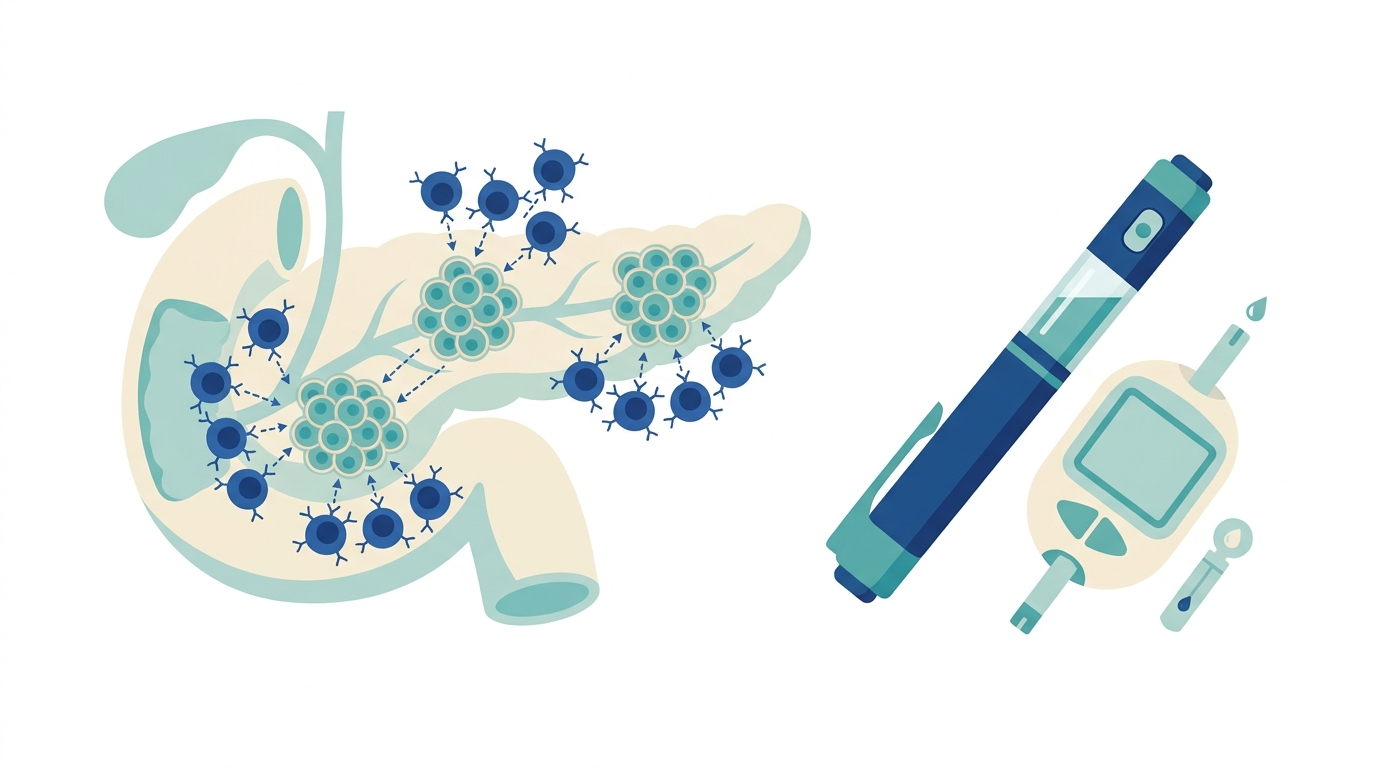
What is type 1 diabetes?
Type 1 diabetes is a chronic autoimmune disease in which the body's immune system mistakenly attacks the beta cells in the islets of Langerhans in the pancreas. These cells produce the hormone insulin, which is essential for transporting glucose (sugar) from the blood into the body's cells, where it is used for energy. Once the beta cells are destroyed, the body can no longer produce insulin — blood glucose rises and the patient needs lifelong insulin therapy.
Unlike type 2 diabetes, type 1 diabetes is not linked to lifestyle or excess weight. It often starts in childhood or young adulthood but can occur at any age. About 5,000 people in Estonia have a T1D diagnosis, and 200–300 new cases are added every year.
Causes and risk factors
The exact reason why the immune system starts attacking the body's own cells is still unknown. Researchers have discovered two main factors that together trigger the disease:
- Genetic predisposition — certain HLA gene variants in particular increase the risk by 10–20 times. Having a relative with the disease raises the risk, but most patients have no family history.
- Environmental factor — viral infections (e.g. enteroviruses, measles), early cow's milk exposure in infancy, vitamin D deficiency or changes in gut microbiota are thought to be triggers in genetically susceptible people.
The disease develops slowly. The autoimmune process can start years before the first symptoms appear. By the time the condition is found through high blood sugar, 80–90% of the beta cells have usually already been destroyed.
Symptoms
T1D symptoms often develop rapidly — within a few weeks or months. The most typical are:
- Severe thirst (polydipsia) — the patient drinks several litres of water a day
- Frequent urination, especially at night (polyuria)
- Unexplained weight loss — often 5–10 kg in a few weeks despite a good appetite
- Constant fatigue and weakness
- Blurred vision
- Slow-healing wounds and frequent skin infections
- Acetone smell on the breath (already at an advanced stage)
Diagnosis
A diagnosis of T1D is made based on the following tests:
- Fasting blood glucose ≥ 7.0 mmol/L
- Random blood glucose ≥ 11.1 mmol/L together with classic symptoms
- HbA1c (glycated haemoglobin) ≥ 6.5% — reflects average blood glucose over the past 2–3 months
- Oral glucose tolerance test (rarely needed) — 2-hour glucose ≥ 11.1 mmol/L after drinking 75 g of glucose
To distinguish T1D from T2D, autoantibodies (GAD65, IA-2, ZnT8, IAA) and C-peptide are additionally measured. In T1D, autoantibodies are often positive and C-peptide is low (own insulin production is reduced or absent).
Treatment: a modern approach
T1D cannot be cured. Treatment is based on insulin replacement and consists of the following components:
Insulin therapy
Insulin can be administered in two ways:
- Multiple daily injections (MDI) — the patient injects long-acting basal insulin 1–2 times a day and rapid-acting bolus insulin before every meal (4–6 injections a day).
- Insulin pump — a small device that continuously delivers rapid-acting insulin throughout the day. The pump can be combined with continuous glucose monitoring (CGM) to create a closed-loop "artificial pancreas" that automatically adjusts the insulin dose.
Continuous glucose monitoring (CGM)
A CGM sensor (e.g. FreeStyle Libre, Dexcom, Linx, CareSense) measures glucose in subcutaneous tissue every 1–5 minutes. The patient sees blood glucose in real time on the phone and receives alerts when it rises or falls to dangerous levels. CGM has been proven to significantly reduce HbA1c, hypoglycaemia risk and improve quality of life.
Carbohydrate counting
The pre-meal insulin dose is calculated from the carbohydrates in the meal. The diabetes nurse teaches you that 1 bread unit = 10 g of carbohydrate and how to determine your personal insulin-to-carb ratio (e.g. 1 unit of insulin per 10 g of carbs eaten). With this knowledge applied in everyday life, the patient can eat almost anything as long as the dose is calculated correctly.
Exercise and body weight
Regular physical activity improves insulin sensitivity and reduces the insulin dose needed. The recommendation is 150 minutes of moderate aerobic activity per week (e.g. brisk walking, swimming, cycling) and strength training twice a week. During exercise, blood glucose must be monitored as it can drop quickly (especially after prolonged aerobic activity).
Complications and how to prevent them
Long-term high blood glucose damages the walls of blood vessels. The most common complications are:
- Retinopathy (damage to the retina) — can lead to blindness
- Nephropathy (kidney damage) — can lead to renal replacement therapy
- Neuropathy (nerve damage) — causes pain, reduced sensation, foot ulcers
- Cardiovascular disease — the risk of heart attack and stroke is 2–3 times higher than in non-diabetics
Good to know: if HbA1c is kept below 7% (ideally 6.5%) and blood pressure and cholesterol are under control, the risk of complications is significantly reduced. This requires dietary discipline, blood glucose monitoring and regular check-ups with an endocrinologist and/or diabetes nurse.
When to come to our clinic?
If you have been diagnosed with T1D or suspect it, book an appointment at Tallinn Endocrinology Clinic. At our clinic:
- The endocrinologist will assess your current status and adjust your insulin therapy.
- The diabetes nurse will teach injection technique, carbohydrate counting and how to set up and use a CGM sensor.
- Tests and investigations will be ordered: HbA1c, albumin/creatinine ratio and retinal photography.
- The ABI index will be measured to assess blood flow in the legs.
Need personal advice?
The endocrinologist and nurses at Tallinn Endocrinology Clinic will help you manage diabetes — book online, by phone or by e-mail.